
The short version
We deploy on Windows IoT or the latest Ubuntu LTS. Both are proven in the field, both run the same core Empire Controls software, and both give you an open, PC-based control platform without proprietary hardware lock-in. The choice comes down to your existing IT environment, your team’s comfort level, and a few operational preferences.
All things equal, Linux tends to run a little more predictably over long uptimes and gives us tighter control over the patch cycle. Windows is often the pragmatic pick when your plant IT is already Windows-standardized and your operators are used to it. Neither is a wrong answer.
Side-by-side
| Windows IoT | Ubuntu (latest LTS) | |
|---|---|---|
| Licensing | Per-device Microsoft license | Free and open-source |
| Long-term support | 10 years from OS release | 10+ years from OS release |
| Uptime under load | Very good | Excellent — slightly more predictable over long runs |
| Patch control | Windows Update, deferrable | Served from our own repository — every patch is tested on our systems before it reaches your plant |
| Reboots after updates | Frequent; can be scheduled | Rare for most patches; kernel-livepatch available |
| Remote access | TeamViewer, AnyDesk, VNC, RustDesk, RDP | TeamViewer, AnyDesk, VNC, RustDesk, RDP, SSH |
| Fit with existing IT | Best if you’re a Windows shop | Best if you already run Linux servers or want to |
| Operator familiarity | Immediately familiar | The HMI looks the same — operators rarely notice |
| Anti-virus overhead | Recommended, adds CPU load | Not typically required |
| Hardware requirements | Higher | Lower — extends the useful life of the control PC |
Where Windows makes sense
Windows IoT is the right pick when your plant already runs on Windows — when your IT team supports Windows machines, your MES or ERP integrations expect Windows, or your operators are most comfortable with the Windows desktop they use everywhere else. Windows IoT gives us long-term OS support, industrial-focused features, and the ability to defer feature updates so nothing changes underneath a running system without your say-so.
Where Linux makes sense
Ubuntu is the right pick when uptime is paramount, when you want lower recurring OS cost, or when you’re happy to let us handle the OS side end-to-end. We keep our Ubuntu machines on the newest long-term-support release, which means a decade of security updates and no forced upgrades in the middle of that window.
Ubuntu also gives us one operational advantage that’s worth calling out on its own.
Our own Ubuntu repository
For Linux deployments, your control PCs don’t pull updates directly from the internet. They pull from a repository we maintain. Every OS patch, security update, and package version flows through our test bench first. If something breaks a driver, conflicts with our control software, or introduces a regression, we catch it before it ever reaches your plant.
The practical effect: your control host stays current on security patches without the classic industrial-controls fear of an update landing overnight and breaking production the next morning. You get the security benefits of an actively maintained OS with the change control of a purpose-built industrial system.
How we help you decide
Most of the time, this is a 10-minute conversation. We ask about your existing plant IT, who’s going to maintain the machine, what your uptime targets look like, and whether you have a preference. If you don’t care, we’ll recommend the option that best fits your environment and get on with the design work.
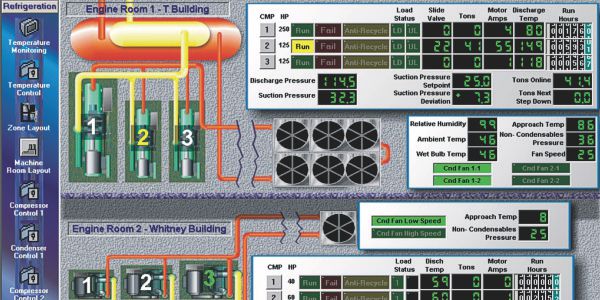
Either way, the control system we build behaves the same way from the operator’s perspective. The screens, the alarms, the trends, the reports — identical. Only the OS underneath changes.
Have a specific setup in mind? Send us the details and we’ll tell you what we’d recommend and why.